


International studies, such as Deloitte, show that investments in mental wellbeing can generate an average return of up to five times. In practice, this means that every euro invested in mental wellbeing can deliver multiple times its value in return.
Mental wellbeing has become a central focus in HR – and for good reason. Psychological strain, burnout and mental health challenges are increasingly visible in organisations through rising sickness absence, higher turnover and reduced productivity. Yet many HR professionals still face the same question: how can investments in mental wellbeing be justified from a business perspective?
Too often, the conversation remains at a general level. We talk about the importance of wellbeing and the need to take care of people. While these are important foundations, they are not enough when decisions are made under limited resources.
That is why it is increasingly important for HR to understand and articulate the financial value of mental wellbeing. A strong business case ensures that wellbeing initiatives are not occasional efforts, but long-term, goal-oriented and embedded in everyday operations.
What does the ROI of mental wellbeing actually mean?
The ROI of mental wellbeing (return on investment) refers to the financial benefits an organisation gains by investing in employees’ psychological capacity to work. The discussion often focuses on sickness absence, but in reality this is only the tip of the iceberg.
A significant share of costs arises before any absence occurs, in the form of:
-
reduced concentration
-
decreased productivity
-
errors and slower performance
-
withdrawal from collaboration
-
presenteeism, meaning working while not fully fit for work
When mental wellbeing is supported early, organisations can prevent situations where strain accumulates and leads to longer absences or even long-term incapacity. This is where the real ROI is created: stronger performance and improved work ability.
Supporting mental wellbeing is everyday leadership, not one-off actions
Supporting mental wellbeing is not about isolated initiatives or occasional benefits. Its impact comes from structured, everyday leadership.
Effective wellbeing management starts with recognising that the workforce is not a homogeneous group. Different employee groups may require different types of support at different stages of their careers and lives. This is why impactful support must be both personalised and scalable, ensuring help is available at the right time and with a low threshold.
Mental wellbeing is not only about responding to crises. When support is available early, it enables self-development and strengthens employees’ learning ability, productivity, motivation and engagement. These factors have a direct impact on organisational performance.
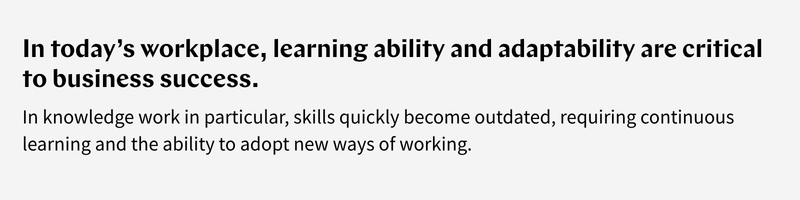
Without sufficient mental skills – such as focus, self-regulation and recovery – learning slows down and strain increases. Developing these skills is directly linked to professional expertise and overall performance.
Organisations that proactively support mental wellbeing also build their ability to adapt and continuously evolve. As learning, productivity and adaptability improve, HR’s role becomes more strategic – and wellbeing investments become harder to cut.
When wellbeing becomes an investment, HR’s role changes
Organisations increasingly refer to employees as a key asset. This thinking only becomes reality when wellbeing is treated as an investment rather than a cost.
HR plays a critical role in balancing business priorities with human needs. By making the impact of mental wellbeing visible, HR helps leadership understand that psychological work ability is a key driver of productivity, engagement and risk management.
When the ROI of mental wellbeing is made visible, HR can justify actions proactively – not only when problems have already escalated.
How can the ROI of mental wellbeing be measured in practice?
One of the most common questions in HR is: what does this mean in our organisation?
The ROI of mental wellbeing is not a single universal figure. It depends on factors such as organisational size, workforce structure and sources of strain. In practice, measuring ROI requires:
-
understanding key mental wellbeing risk factors
-
data on sickness absence and work ability challenges
-
tracking mental health-related sickness absence, as its reduction is a clear and directly quantifiable financial indicator
-
tools to provide support early
-
the ability to track outcomes and compare them with business metrics
Auntie supports HR in leading mental wellbeing in the workplace
Auntie is designed to support HR and organisations in managing mental wellbeing in a structured and proactive way. It provides employees with low-threshold support across a wide range of situations – from personal development and managing strain to more demanding life circumstances.
Auntie’s personalised and scalable model ensures that different groups receive the support they need without overburdening HR resources. At the same time, HR gains a clear overview of key themes and where interventions should be targeted.
Mental wellbeing can – and should – be measurable. Auntie Insights provides organisations with direct visibility into wellbeing trends and development areas. Without measurement, HR is left relying on assumptions, which weakens decision-making.
When data is available, managing mental wellbeing becomes a business-critical and well-justified activity – not just a well-intentioned one.
What to do once you know your mental wellbeing ROI?
A number alone does not create impact. Value comes from how the data is used and how mental wellbeing is linked to business objectives. In practice, HR can approach this by:
-
identifying key risk factors across different employee groups
-
assessing how these impact productivity, learning ability and adaptability
-
defining clear objectives for early intervention
-
tracking progress and impact over time
-
comparing results with business metrics such as sickness absence, turnover and productivity
When discussing mental wellbeing with leadership, it should be framed in the same way as any other investment: by comparing options, evaluating impact and making risks visible.
When wellbeing is clearly linked to business performance, it becomes a strategic priority – not a separate HR initiative.
Make the ROI of mental wellbeing visible
When HR can speak about mental wellbeing in financial terms, it strengthens its role as a strategic partner within the organisation. This is not about reducing people to numbers, but about making the impact of their wellbeing visible in decision-making.
Would you like to understand what the ROI of mental wellbeing could look like in your organisation?
We can calculate it together and help identify where investments will have the greatest impact. Get in touch to start the conversation and build a proactive, business-aligned approach to mental wellbeing.
.png)
Frequently asked questions about the ROI of mental wellbeing
Share article


Writer: