


Motivation isn’t a constant state. It changes depending on life circumstances, workload, shifts in day-to-day routines and overall rhythm. For example, after a holiday break it’s completely normal for motivation to return more slowly.
Motivation can be viewed through three factors: direction (what the effort is aimed towards), intensity (how much energy is invested) and persistence (how long we keep going even when obstacles arise).
When motivation feels low, it isn’t necessarily a “lack of motivation” – it may simply mean that one of these areas needs more clarity.
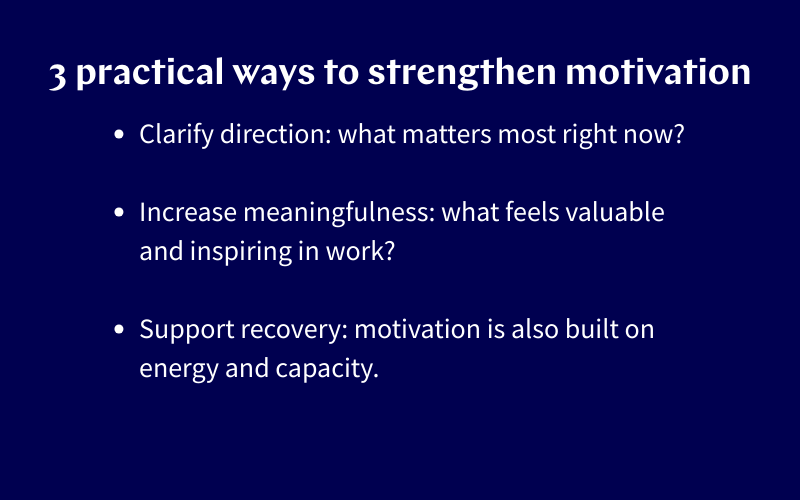
Clarity creates direction
Motivation often grows when the direction is clear: what is being done, why it matters and what the work is moving towards.
When clarity is missing, everyday work can easily start to feel fragmented. Getting started becomes harder, and there may be a sense that there is a lot to do, yet nothing truly moves forward. In those moments, even one small decision can be enough to regain momentum.
A short pause:
What is one thing that would make this week feel successful?
Meaningfulness fuels motivation
A sense of meaningfulness can strengthen both wellbeing and job satisfaction. Meaningfulness is often built through experiences such as:
- a sense of influence and autonomy
- a sense of competence and achievement
- a sense of belonging and feeling valued
- a sense that one’s work has a positive impact on others or supports a shared goal
A question to explore:
What feels valuable and important in work right now – and how could it be strengthened?
Recovery supports motivation in the long run
Motivation can’t be built sustainably if the workload remains constantly high. Short-term stress can sometimes sharpen focus, but when stress becomes prolonged it can reduce motivation: thinking narrows, initiative decreases and a sense of meaningfulness may fade.
That’s why strengthening motivation isn’t just a question of “mindset”. It’s also connected to very practical things such as sleep, recovery, breaks and managing the overall load in everyday life.
A question to explore:
What is one recovery habit that could support energy and capacity already this week?
Summary: motivation grows when direction becomes clear
When motivation feels low, the most important step is not to improve everything at once. Often it is enough to bring clarity to the situation:
- what matters most right now
- what is draining energy
- what the next small step is
Start with Auntie here.
Share article


Writer: